Research & Scholarship
Research Focus
My research examines how public institutions and cultural infrastructures organize democratic life through policy, media, and public-facing storytelling, with a sustained focus on the National Film Board of Canada (NFBC).
This work tracks how institutions articulate responsibility, narrate crisis, and structure public participation across time.
Theoretical Orientation:
My analysis draws on three interconnected concepts that guide case selection, interpretation, and claims:
Art as a public service and public code:
A paired orientation that treats cultural production and interface design as forms of public obligation, with attention to how institutional mandates, formats, and protocols shape what publics can see, learn, contest, and carry forward.
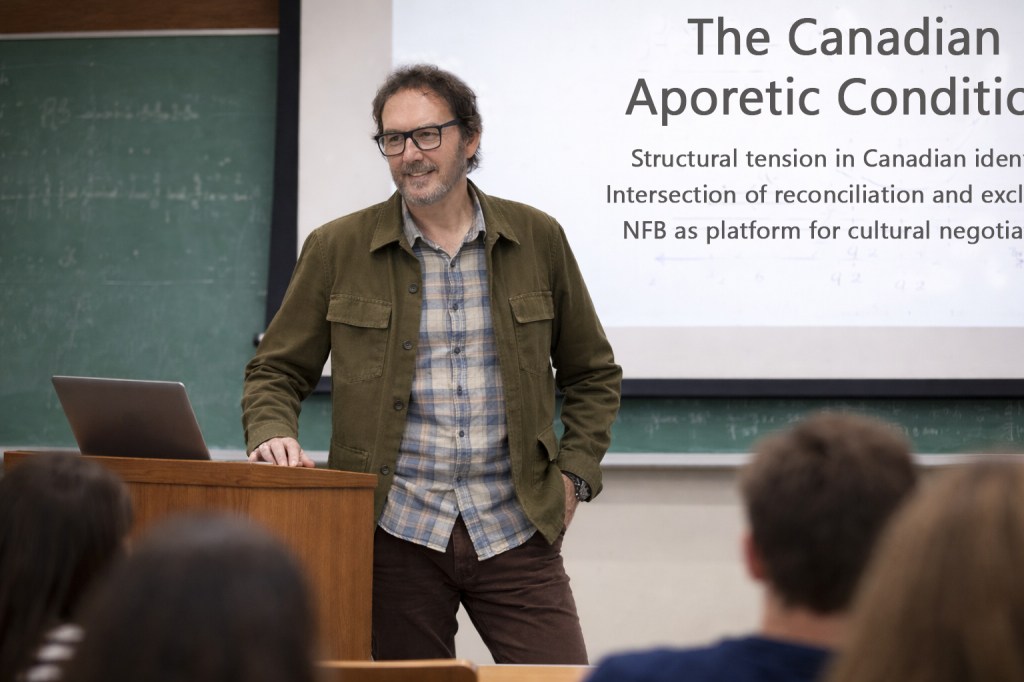
The Canadian aporetic condition:
An analytic framework that names recurring tensions in Canadian public life—identity, legitimacy, governance, and cultural memory—and treats those tensions as structuring conditions that shape institutional storytelling and public discourse.
Counter-policy:
An approach to identifying and evaluating institutional practices that generate workable public alternatives—models of responsibility, participation, and accountability that partners can adapt for governance and public communication contexts.
Research Focus:
- Public institutions and public communication: Institutional legitimacy, public accountability, mandate interpretation, and governance narratives
- Digital storytelling and democratic engagement: Interactive media, counter public formation, civic learning, and participation design
- Cultural and environmental memory: Visual culture, ecological history, environmental governance narratives, and institutional mediation of memory
- Media, crisis, and reconciliation: Documentary form, public pedagogy, representational choices, and the conditions of civic repair in Canadian contexts
Approach and evidence base:
This work emphasizes public-facing institutional records, policy and mandate texts, and media artifacts, with a commitment to traceable evidence, interpretive clarity, and usable synthesis for scholarly and partner contexts.
